

Straight answer first: getting the G.E.T right increases bucket availability by reducing wear related downtime, preventing secondary damage, and extending the effective operating life of digging assets.
This article is for mining operations managers, maintenance planners, reliability teams and those responsible for keeping loading equipment productive in all conditions. Bucket availability matters because lost dig time directly impacts tonnes moved, fuel efficiency, upstream congestion, and overall cost per tonne.
In many operations, G.E.T (Ground Engaging Tools) doesn’t get the focus it deserves and is treated as a consumable rather than a performance lever. When wear is unpredictable, change outs become reactive, damage spreads beyond the wear parts, and machines are forced offline at the worst possible times. The right G.E.T strategy changes that by making wear behaviour more predictable, controlled, and aligned with how the mine operates.
Bucket availability improves when wear is managed, not tolerated. Our mining Ground Engaging Tools (GET) systems increases availability by controlling how and where material abrasion occurs, protecting the bucket structure, extending the interval between required change outs to keep the machine operating.
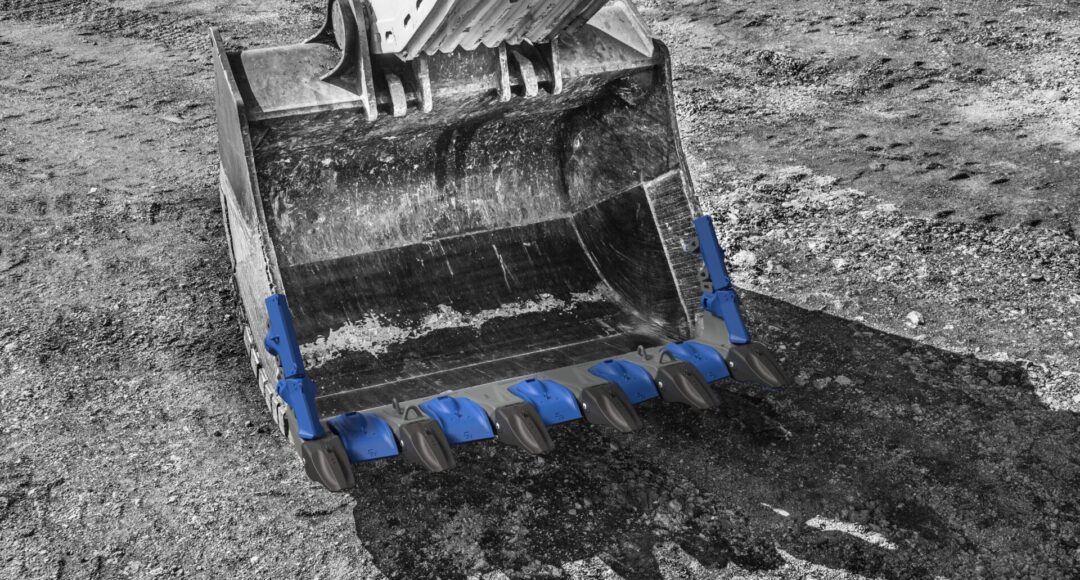
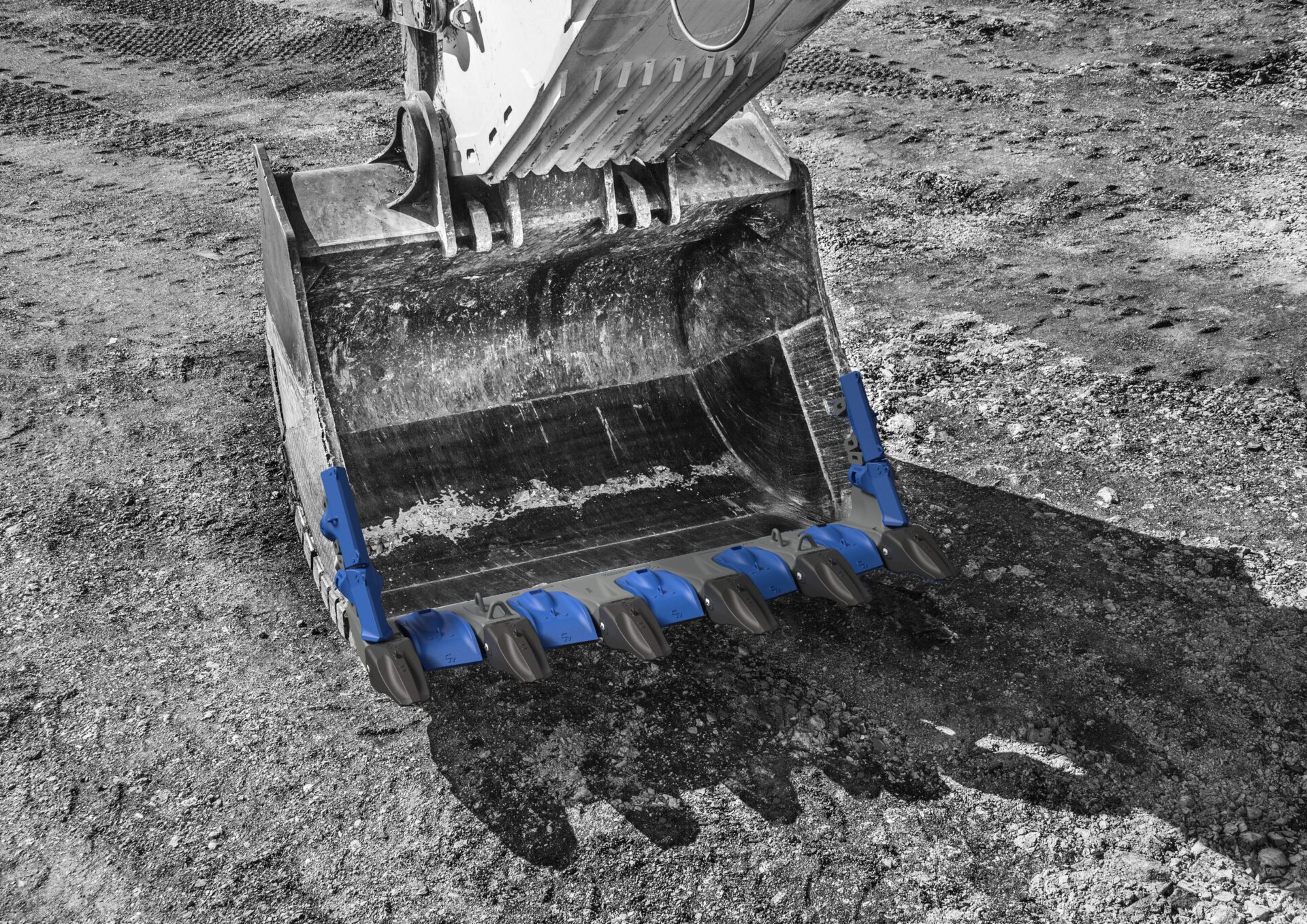
First, our world‑class Ground Engaging Tools (G.E.T) systems—such as SaberEdge for rope shovels, Stingray for hydraulic excavators, DecaEdge for wheel loaders, and Wearpact for LHDs—are engineered to wear in a predictable and controlled manner. Rather than allowing uneven or accelerated wear, the design ensures consistent material removal across the component. That predictability allows maintenance teams to plan change outs before performance drops or failures occur, reducing throw away mass of replaced G.E.T.
Second, it protects critical bucket structures. When G.E.T wears out too fast—or unpredictably—damage transfers to adapters, lips, and the bucket itself. By maintaining correct geometry and fit for longer, our G.E.T prevents secondary damage that would otherwise force extended outages and costly bucket rebuilds or replacement.
Third, it reduces the duration and frequency of downtime events. Eliminating direct human contact with G.E.T during removal, the GRIPAssist G.E.T removal system improves safety while enabling faster, more controlled replacements. This reduces both planned maintenance time and unplanned downtime associated with the bucket.
The net result is higher effective digging hours, fewer emergency interventions, and more stable production. Availability improves not because operators push the equipment harder, but because the bucket performs consistently throughout the wear cycle.
From an operational standpoint, bucket availability is driven by how wear interacts with production schedules. G.E.T impacts availability across four practical stages:
1. Wear Visibility
Poorly performing G.E.T wears inconsistently, making end of life difficult to predict. Our G.E.T provides clear visual and dimensional wear cues using gauging, allowing teams to identify replacement windows earlier.
Example: Maintenance can plan a GET change during a scheduled pause rather than reacting to a cracked adapter or lost tooth mid shift.
2. Structural Protection
Once G.E.T fails prematurely, damage escalates rapidly to surrounding areas. Adapter movement, lip deformation, and cracking reduce availability far beyond the original wear issue.
Example: Extended G.E.T life reduces the possibility of unwanted movement that would otherwise accelerate fatigue damage in the bucket lip.
3. Change Out Efficiency
Even planned downtime costs money. Our system is designed for safer, faster change outs, reducing maintenance hours and lost productivity.
Example: Shorter change outs mean less disruption to production crews and faster return to full capacity.
4. Consistent Dig Performance
As G.E.T wears, digging performance reduces, reducing fill factor and productivity and increasing dig energy required.
Example: Maintaining proper geometry throughout the wear cycle preserves penetration and material flow, keeping equipment productive even late in component life.
By improving performance at each stage, overall bucket availability increases while maintenance effort becomes more predictable and controllable.
Myth 1: “All G.E.T wears the same”
Wear rate, pattern, and impact on the bucket vary significantly by design, fit and dig conditions yet have a profound effect on longevity of the G.E.T. Having the correct G.E.T fitted to the bucket to match the expected conditions likely to be encountered not only extends the life of the G.E.T and bucket but also improves machine productivity and output.
Myth 2: “Cheaper G.E.T saves money”
Upfront savings are quickly lost by unplanned equipment downtime, unexpected damage, and lost production caused by premature wear and failure of G.E.T. Lower quality GET typically wears faster, breaks more easily, and requires more frequent replacement, leading to higher downtime, maintenance labour, and lost production.
Myth 3: “Run it until it fails”
Worn or damaged G.E.T. reduces digging efficiency, increases fuel burn, and accelerates wear on buckets, adapters, and machines. Sudden failures can also cause unplanned downtime and safety risks. Proactive inspection and timely replacement keep equipment operating at peak performance, reduce repair costs, and help maintain consistent productivity over the life of the machine.
How to Apply This Effectively
• Identify assets where bucket downtime directly constrains production
• Track wear life and change out frequency
• Inspect adapters and lips at every change out
• Align replacement timing with planned stops
• Standardize G.E.T where possible to reduce variability
Decision logic:
If worn G.E.T is risking structural damage or unplanned stops, it’s already past optimal replacement.
FAQs
How does G.E.T affect overall machine availability?
G.E.T directly impacts availability by determining how often buckets must be taken offline and whether wear leads to secondary damage. Longer, predictable wear reduces downtime events and improves production stability.
Can improved G.E.T really prevent structural damage?
Yes. Properly designed and fitted G.E.T absorbs abrasion and impact energy, preventing movement and stress transfer into adapters, lips, and bucket shells.
Is this only relevant for high abrasion applications?
No. While benefits are amplified in high abrasion conditions, predictable wear and structural protection improve availability in all digging environments.
How quickly do sites see results?
Many operations see reduced downtime within the first wear cycle through fewer unplanned change outs and faster maintenance execution.
Summary + Next Step
Bucket availability improves when wear is controlled, damage is prevented, and maintenance becomes predictable. The right G.E.T turns a consumable into a reliability asset—protecting buckets, reducing downtime, and supporting consistent production.
Next step: review one loading unit where bucket related downtime has impacted tonnes moved in the past six months. Improving G.E.T performance there delivers immediate, measurable availability gains.
For more information please contact:
Nicholas Groothoff, Engineering Manager – Surface
GET IN TOUCH
CR Powered by Epiroc engineers advanced mining products and digital solutions for surface and underground mining equipment. Its advanced physical and digital solutions help the world’s best miners unlock productivity, enhance safety, and reduce emissions. With a rigorous design process, data-driven testing, and experienced engineers, they offer next-gen mining technology that connects actionable data with operational decisions for sustainability and performance. Learn more at www.crmining.com.